
Was bedeuten die Klimaänderung und das Abschmelzen der Gletscher für die Alpen?
Deutliche Zeichen der Klimaänderung sind die weltweiten Wetterextreme 2024 – mit Temperaturrekorden, Überschwemmungen, Hurrikanes und Waldbränden von nie dagewesener Stärke.
Das Jahr 2024 war das weltweit heißeste Jahr seit Beginn der Messungen.
Im Alpenraum steigt das Gefahrenpotential mit den Temperaturen: Durch das schnelle Abschmelzen der Gletscher werden große Schuttareale, die sogenannten Gletschervorfelder, freigelegt. Das lockere Gestein kann bei Starkregen als Murgang oder Erdrutsch Täler und Siedlungen gefährden. Schnell ansteigende Gletscherseen bilden sich und die Bergsturz-Gefahr nimmt zu.
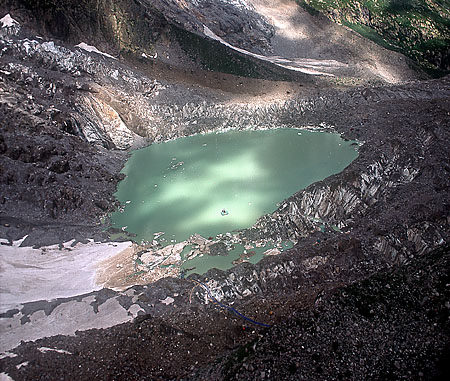
Gletschersee oberhalb Macugnaga, Italien, 2002 © GöF
Bereits im Sommer 2006 kommt es zu einem Durchbruch eines Gletscherhochwassers mit Murgang im Vadret da l’Alp Ota. Eine Touristin kommt dabei ums Leben.
Spektakuläre Felsstürze ereignen sich immer häufiger.
Denn der Permafrost taut auf:
Permafrost – das ist jene etwa 20 bis 100 Meter dicke Schicht aus Eis und Boden im Hochgebirge, die normalerweise das ganze Jahr über gefroren bleibt. Die Temperaturen der Permafrostböden im Gebirge steigen mit ähnlicher Geschwindigkeit an wie die Lufttemperaturen. (PERMOS Schweizer Permafrostüberwachungsnetz www.permos.ch))
„Die Messungen über mehr als 20 Jahre dokumentieren einen generellen Trend von Permafrost-Erwärmung in den Schweizer Alpen, zusammen mit einer Abnahme des Eisgehalts im Untergrund und einer Beschleunigung der Blockgletscher. Dieser allgemeine Trend variiert mit der räumlichen Variabilität der Permafrostbedingungen und kann durch kurzfristige Schwankungen der meteorologischen Bedingungen überlagert werden“ (Swiss Permafrost Bulletin 2023)
Auch die Messungen in der Zugspitze ergeben: „Der bisherige Beobachtungszeitraum lässt bereits eine erkennbare Tendenz für eine Zunahme der Gesteinstemperaturen und somit eine Reduzierung des Permafrosts erkennen.“
Blockgletscher bewegen sich deutlich schneller als vor 20 Jahren
Blockgletscher sind talwärts kriechende Schuttmassen, bestehend aus Gesteinsblöcken und Eis. Sie bewegen sich immer schneller.1Taut das Bodeneis, kommen die Berghänge in Bewegung. Manchmal gleiten sie im Zeitlupentempo zu Tal, aber es kann auch zu plötzlichen Hangrutschungen und Felsstürzen, zu Geröll- und Schlammlawinen kommen.
Alle zehn großen Bergstürze der letzten zehn Jahre in der Schweiz haben sich in Permafrostzonen ereignet.2
Bereits 2006 gab es einen großen Felssturz an der Ostflanke des Eiger. Hunderttausende Kubikmeter Gestein stürzten auf den Unteren Grindelwaldgletscher. Als Hauptursache wird der Rückzug des Unteren Grindelwaldgletschers vermutet. Dadurch fehlt der Druck auf die Felspartie.
Auftauender Permafrost war wahrscheinlich auch ein Auslöser für den katastrophalen Bergsturz im regenreichen Sommer 1987 im Veltlin in den Italienischen Alpen.
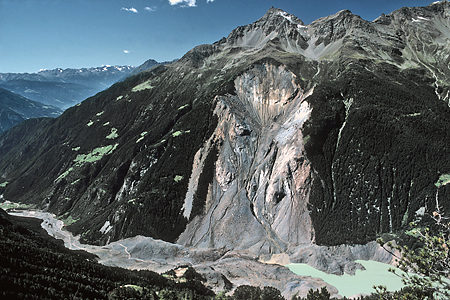
Bergsturz Bormio, Veltlin, Italien, 1987 © GöF
2017 kamen acht Menschen ums Leben, als von der Nordflanke des 3369 Meter hohen Piz Cengalo oberhalb von Bondo im Schweizer Kanton Graubünden etwa drei Millionen Kubikmeter Gestein abbrachen und ins Tal stürzten; die dadurch ausgelösten Murgänge führten zudem zu Zerstörungen und Evakuierungen im Tal.
Der Permafrost am Schafberg über dem Ort Pontresina taut auf.
Deshalb hat die Gemeinde im schweizerischen Engadin einen riesigen Damm gebaut, der Geschiebe, Muren und Lawinen aufhalten soll – Kosten: fast acht Millionen CHF.
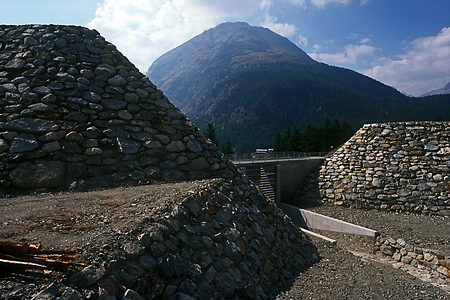
Auffangdamm oberhalb Pontresina, Engadin, Schweiz, 2003 © GöF
Häufigkeit und Stärke extremer Wettereignisse mit katastrophalen Folgen haben bereits zugenommen: Wurden die Stürme wie „Vivien“ und „Wiebke“ (1991) und “Lothar“ (1999) noch als „Jahrhundert-Stürme“ bezeichnet, haben sich Sturmstärken in den vergangenen Jahren weltweit verstärkt. Wirbelstürme und orkanartigen Sturmböen mit ungewöhnlich hohen Windgeschwindigkeiten treffen auch den Alpenraum. Schnelle Wechsel zwischen warm und kalt, Winddrift von Schnee und ungewöhnlich starke Schneefälle können Riesenlawinen auslösen – wie 1999 in Galtür im Tiroler Paznauntal, wo 38 Menschen ums Leben kamen.
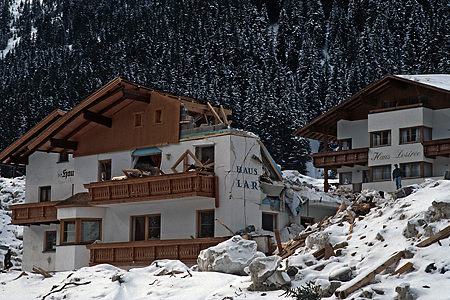
Lawine Valzur, Paznauntal, Österreich, 1999 © GöF
Auch die „Jahrhundert“-Hochwasser, Überschwemmungen und Muren werden häufiger in Abwechslung mit Hitzewelle und Trockenheit – das zeigt deutlich, was noch uns bevorsteht.
Diese Klimaextreme werden sich weiter verstärken. Das wiederum beschleunigt den Gletscherschwund.
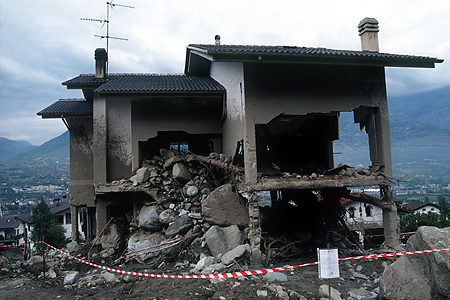
Schlammlawine Aostatal, Italien, 2000 © GöF
Die Klimaänderung beeinträchtigt das Wasserschloss Europas:
- Große europäische Flüsse wie Rhein, Rhone und Po entspringen in Gletscherregionen der Alpen. Der Abfluss aus den Gletschergebieten ist stark angestiegen.
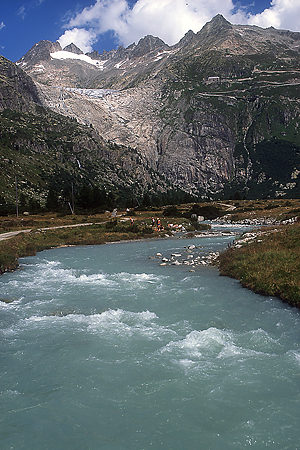
Rhone unterhalb Rhonegletscher bei Gletsch, Schweiz, 2003 © GöF
- Nach häufigeren und stärkeren Hochwasserereignissen können Wasserengpässe folgen. Die langfristige Trinkwasserreserve, gebunden im Gletschereis, ist gefährdet. Weltweit stellen die Gletscher (mit Arktis und Antarktis) die größte Süßwasserreserve der Erde dar.
Die Klimaänderung führt zum Verlust der Artenvielfalt:
Schon jetzt steigt die Alpenflora bergauf. Konkurrenzstarke Arten wandern nach oben, während die rare und hochangepasste Hochgebirgsflora in Bedrängnis gerät. Ist der Gipfel des Berges erreicht, gibt es kein weiteres Ausweichen: Pflanzenarten (und Tierarten) sterben aus. Schätzungen gehen davon aus, dass von 400 endemischen (nur hier vorkommenden) Pflanzenarten der Alpen ein Viertel vom Aussterben bedroht ist.
Die Alpen sind eine der grössten weitgehend naturbelassenen Regionen Europas. Sie beherbergen allein 4500 Pflanzenarten – ohne die Moose mitzuzählen –, und damit etwa ein Drittel der gesamten Flora Westeuropas. 400 dieser Gewächse leben ausschliesslich in den Alpen – deshalb werden größere Schutzgebiete in allen Höhenlagen gefordert (/www.wsl.ch).
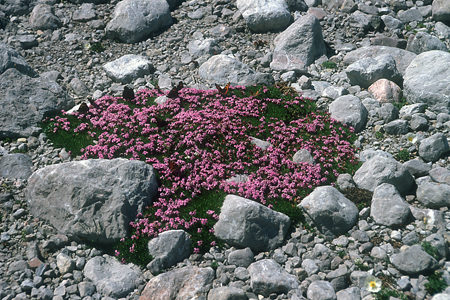
Alpenflora © GöF
Destabilisierte Waldökosysteme
Häufigere Wetterextreme destabilisieren Waldökosysteme und vergrößern bereits vorhandene Schäden.
Die Bäume und Waldökosysteme sind durch die Luftverschmutzung – vor allem an der Alpennord- und -südkette und entlang der Transitstrecken – erheblich belastet und geschädigt.
Die Aussage: „Wenn früher von Waldsterben die Rede war, ging es um Luftverschmutzung und sauren Regen. Heute verändert der Klimawandel die Wälder“ – das lässt außer acht:
- Luftschadstoffe und Treibhausgase haben weitgehend die gleiche Ursache: Verbrennungsprozesse, – vor allem die Verbrennung fossiler Brennstoffe wie Erdöl, Kohle, Erdgas und alle Folgeprodukte wie Benzin, Diesel, Kerosin, Koks und Flüssiggas – setzen Schadstoffe einschließlich der Treibhausgase wie CO2 frei. Hinzu kommen die Emissionen der Agrarindustrie aus Dünger und Pestiziden (Ammoniak, Pestizide und Lachgas, Methan).
Besonders Bergwälder sind gefährdet
Sturmwürfe werden häufiger und die Massenvermehru von Insekten wie Borkenkäfer wird durch Luftverschmutzung und Klimawandel begünstigt.
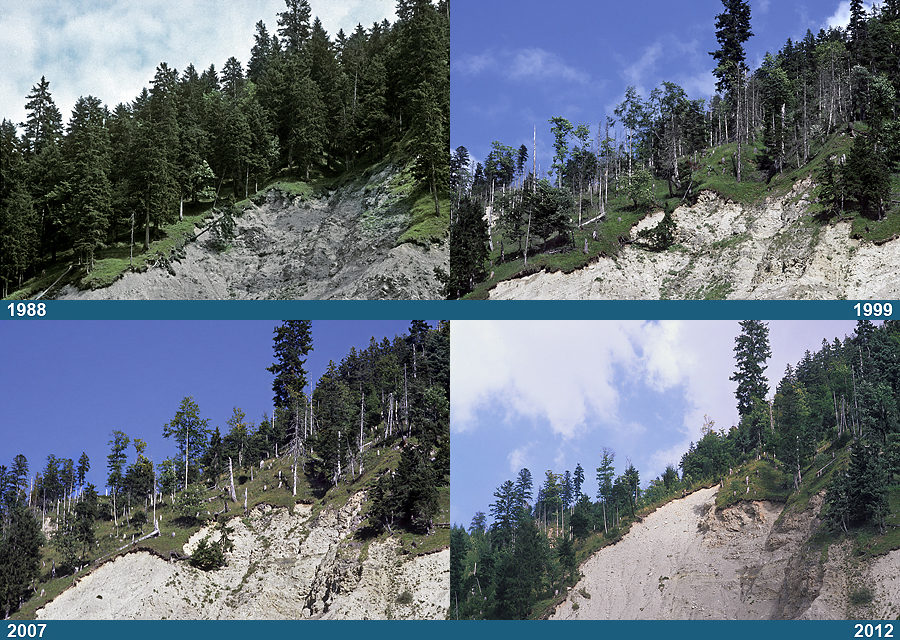
Bergwald im Dauerstress: Waldschäden und Sturmwurf, Allgäu, Bayern © GöF
Waldbrände drohen in den Hitzejahren: 2024 brannten 450 Hektar Berg- und Schutzwald im Wallis – Ursache waren Schüsse auf Stromleitungen – und die Brände breiteten sich „blitzartig“ aus.
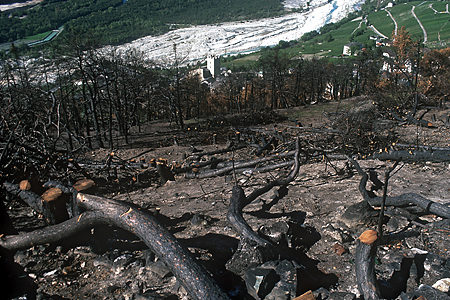
Abgebrannter Schutzwald oberhalb Leuk, Wallis, Schweiz, 2003 © GöF
Der Bergwald ist für die Besiedelungen und die Infrastruktur des Alpenraumes von elementarer Bedeutung. Ohne Bergwald erhöht sich die Gefahr von Lawinen, Fels- und Hangrutschungen, Bodenabtrag, Erosion und Hochwasser.
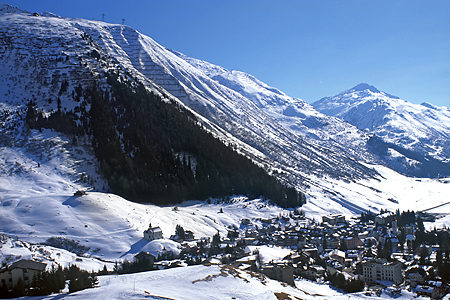
Schutzwald oberhalb Andermatt, Uri, Schweiz, 1998 © GöF
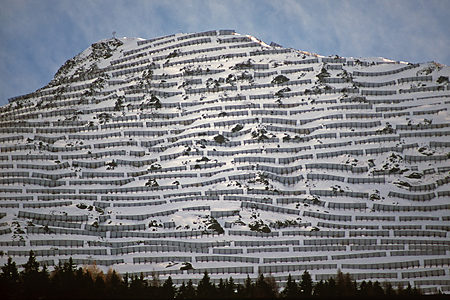
Lawinenverbau, St. Anton, 5.1.1998 © GöF
Gefährdung des Alpentourismus
Die Klimaänderung gefährdet wichtige Grundlagen des Alpentourismus:
- Das Verschwinden der weißen Berge beeinträchtigt die ästhetische Attraktion der Alpen.
- Die Zahl und Größe von gefährlichen Felsstürzen nimmt zu.
- Das Ende vieler Skigebiete: Die Grenze für Schneesicherheit steigt an. http://www.goef.de/_media/der_gekaufte_winter_20151212.pdf
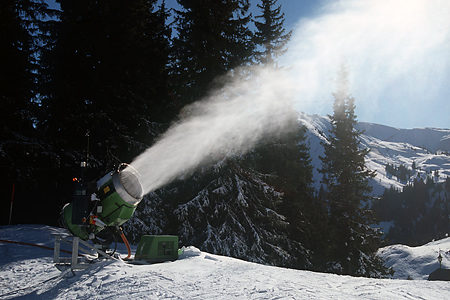
Schneekanonen: Bau am Patscherkofel, Betrieb oberhalb Kitzbühl © GöF
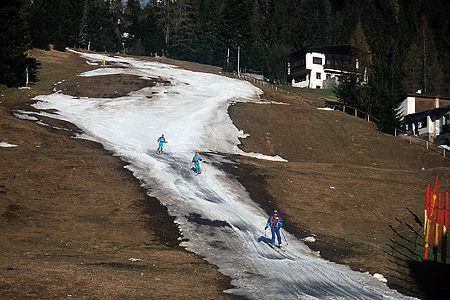
Madonna di Campiglio, 1997 © GöF
Für Skigebiete, die unterhalb 1500 Meter liegen, wird dieser Ausbau außer Schulden und ökologischen Schäden wenig bringen. Die Temperaturen für die künstliche Beschneiung sind schon heute immer häufiger zu hoch. Durch den hohen Wasserverbrauch der Anlagen wird in manchen Gebieten zudem das Trinkwasser im Winter knapp.
Für den Bau großflächiger Beschneibecken werden sogar wertvolle Bergwälder gerodet und Moore entwässert. Um den hohen Wasserbedarf zu decken, wird auch Trinkwasser aus dem Tal nachgepumpt.
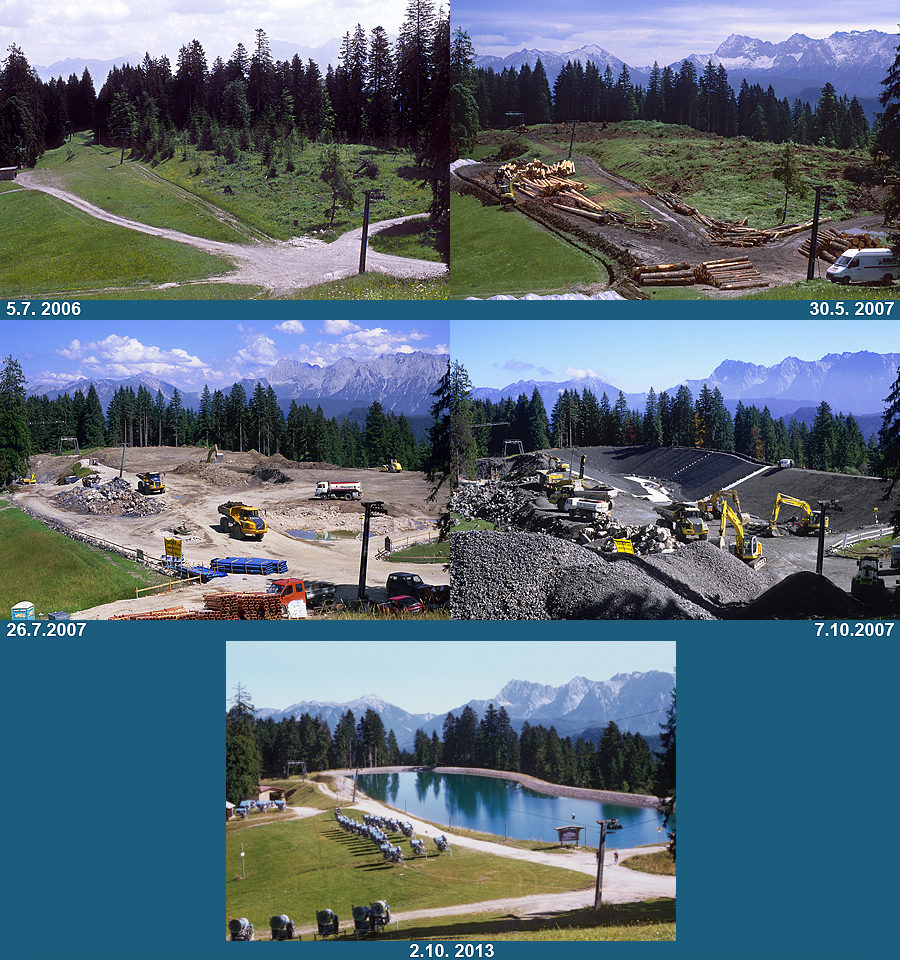
Garmisch, Kreuzwankl, Bau eines Beschneibeckens 2006, 2007 und 2013 © GöF
In den höher gelegenen Gebieten sind die ökologischen Folgen von Bauarbeiten und Planierungen für Beschneiung und Pisten noch weit kritischer zu beurteilen.
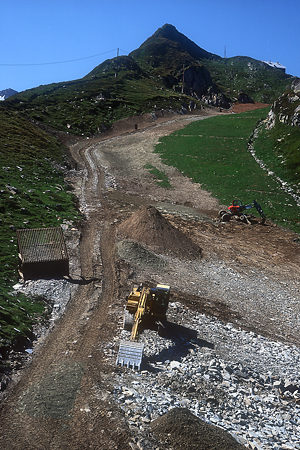
Verlegungsarbeiten für Schneekanonen und Pistenplanierung, Kitzsteinhorn © GöF
Sogar Gletscherskigebiete werden künstlich beschneit.

Gletscherskigebiet mit Schneekanonen, Hintertux, Tirol, Österreich © GöF
Betroffen sind vor allem nahezu unberührte Hochgebirgsregionen. Auch Gletscher werden nicht verschont. Gletscherskigebiete bieten – besonders im Sommer – ein sehr trostloses Bild.
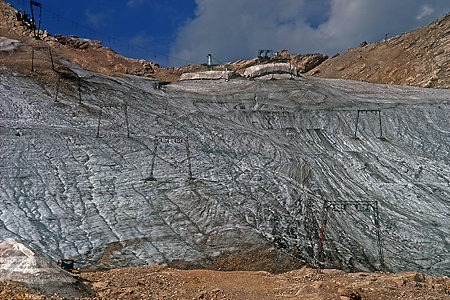
Gletscherskigebiet Schneeferner, Zugspitze, Bayern im Sommer 2003 … und im Winter davor. © GöF
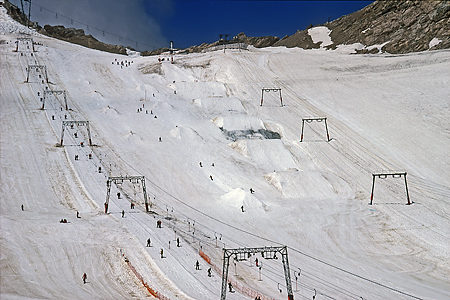
Neue Gletscher-Eingriffe mit „Zusatz“-Erschließungen und Liftüberbauungen sind geplant. Der bestehende Gletscherschutz wird mit diesen Vorhaben außer Kraft gesetzt
s. „Einzelbilder: Weißseeferner“
Kletterrouten
Auch das Bergsteigen im Hochgebirge wird gefährlicher. Berühmte Eiswände tauen ab.
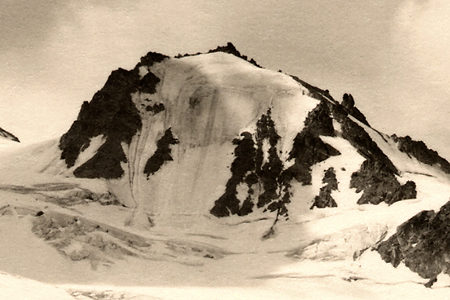
Nordflanke Jamspitze, Silvretta, Österreich 1929 und 2001 © GöF
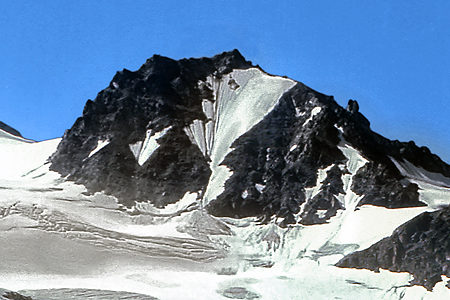
Hochtouren sind zunehmend durch Steinschlag bedroht.
Mehr als 100.000 Kubikmeter Gestein sind bei einem Felssturz vom Fluchthorn in Tirol abgebrochen – wie durch ein Wunder wurde niemand verletzt. Solche Ereignisse passieren immer häufiger in den Alpen.